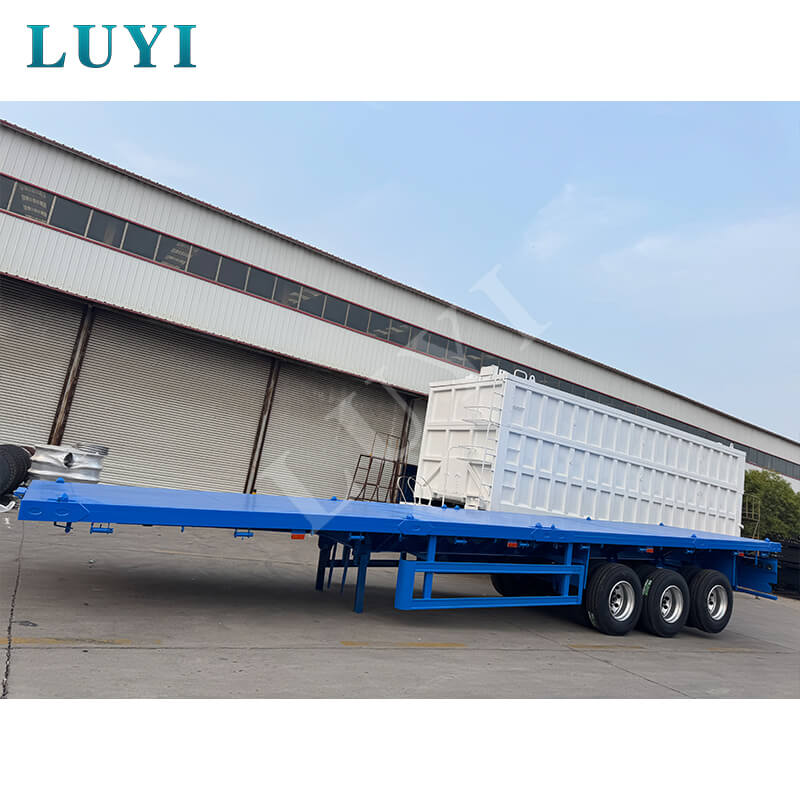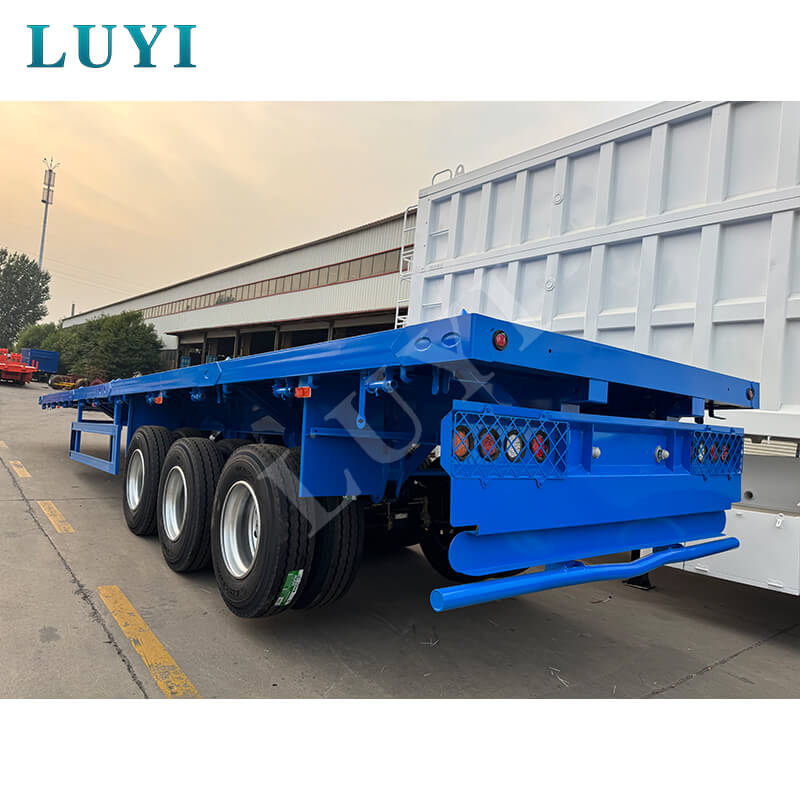
Every freight company faces small but annoying operational problems that affect daily delivery efficiency. Many local transport teams are troubled by limited loading space, slow manual cargo handling and messy vehicle planning, which collectively raise daily operating costs. Flatbed trailers solve these common logistics problems effectively. They optimize scattered delivery procedures and greatly simplify daily cargo transportation for frontline workers.
The most prominent advantage of standard flatbed trailers is their fully open deck design. Without enclosed side plates and roofs limiting storage space, they can carry almost all common types of freight, including daily packaged goods, building materials, industrial parts and steel supplies. Thanks to this strong versatility, logistics staff no longer need to prepare different professional trailers for diverse cargoes. This effectively reduces scheduling pressure and saves long-term costs on fleet maintenance and equipment replacement.
Such a barrier-free structure also greatly improves the efficiency of on-site cargo loading and unloading. Workers can flexibly operate forklifts, cranes and other conventional handling tools from all directions without structural obstacles. In
practical transportation scenarios, this design saves nearly 40% of handling time compared with traditional closed trailers, allowing drivers to finish more delivery tasks per day. Adopting high-strength steel frames, these trailers feature stable load capacity and outstanding wear resistance, reducing maintenance frequency and lowering potential safety risks during repeated long-distance transportation.
In conclusion, standard flatbed trailers bring practical and visible improvements to daily freight transportation. Their flexible structural design, efficient operation mode and economic advantages eliminate many cumbersome and inefficient links in traditional logistics work. They effectively improve the overall operational efficiency of transport fleets and have become stable, reliable and commonly used equipment for daily general freight haulage in modern logistics.