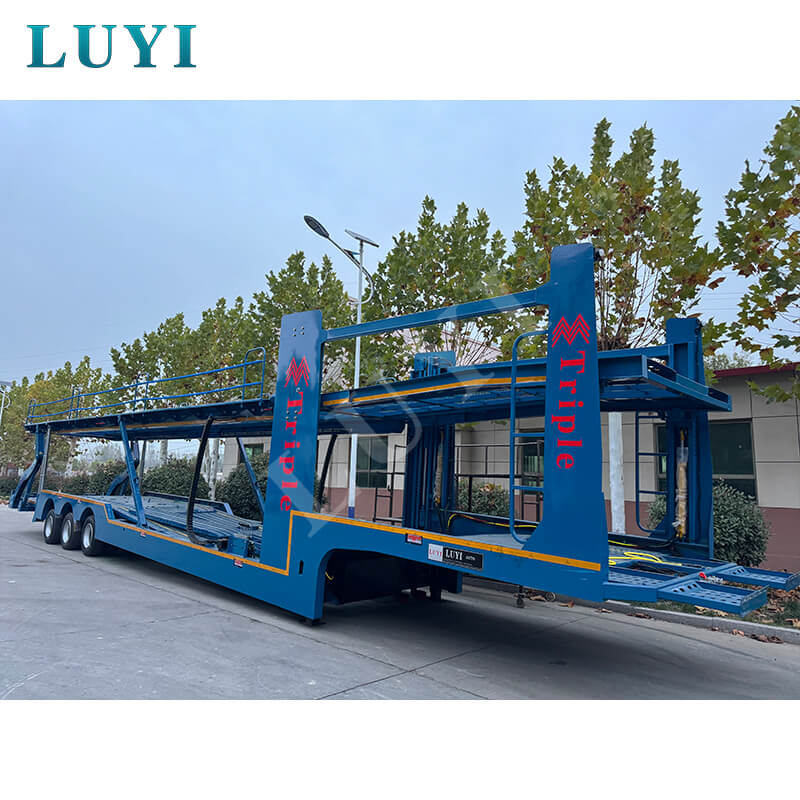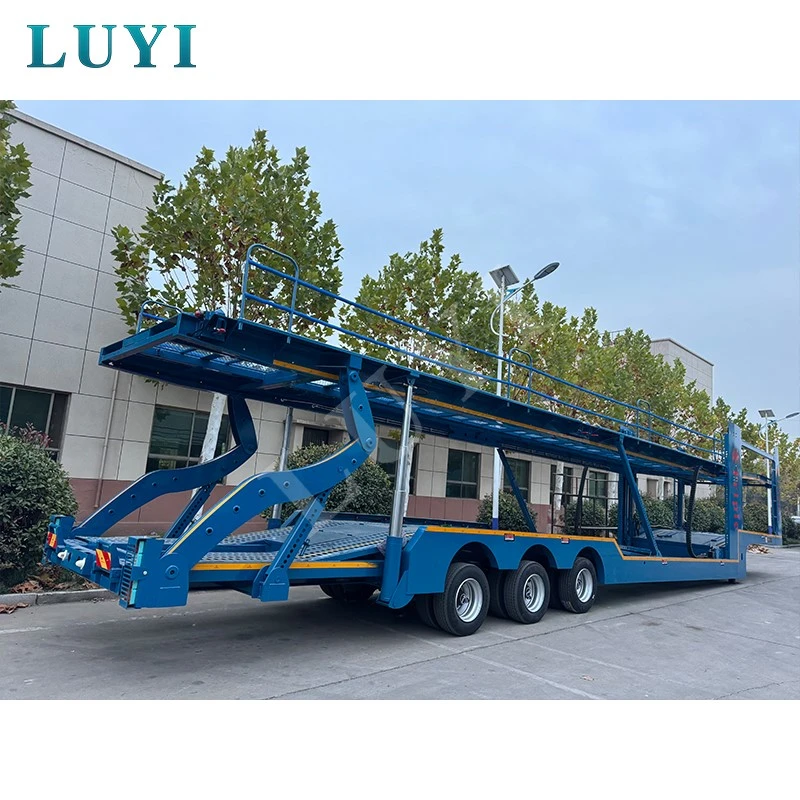
It is inaccurate to set a fixed carrying figure for double-deck car carrier trailers, as actual vehicle loading capacity varies greatly in real logistics scenarios. Multiple practical conditions restrict the maximum loading number, such as the trailer's structural layout, available loading area, and the different sizes and weights of transported cars. In addition, local highway safety and transportation regulations also set rigid limits for loading work. Reasonable calculation of carrying capacity can avoid overloading risks, guarantee travel safety, and meanwhile improve the actual operating benefits of vehicle transportation.
On actual loading sites, trailer structure and vehicle type are the two core factors that change the final loading quantity. Most 45 to 53-foot dual-layer car carriers are fitted with hydraulically adjustable upper decks. This practical setup makes full use of vertical room on the trailer and accommodates vehicles of varying heights. The size and body style of the shipped vehicles are the biggest reason for fluctuating load numbers. Small everyday family cars can be arranged in offset positions to make better use of vacant space, allowing operators to load up to 8 to 10 cars in ideal circumstances. In comparison, mid-size SUVs and crossover models take up considerably more room, reducing the feasible load to 6–8 vehicles. Meanwhile, large pickup trucks with bigger bodies occupy the largest
area, which only allows 5 or 6 units to be safely loaded onto the trailer.
All on-site loading arrangements must strictly abide by national traffic regulations and safety operation standards. Current road rules clearly stipulate that trailer width shall not exceed 2.55 meters and the total vehicle height shall be controlled within 4 meters, prohibiting any over-limit placement. Besides dimensional constraints, balanced weight distribution is also indispensable. Uneven load between upper and lower decks will cause long-term stress on the trailer frame, leading to structural distortion. This issue undermines driving stability and easily triggers safety accidents during long-distance haulage.
In routine commercial logistics, mainstream double-deck car carriers generally carry 6 to 8 vehicles in daily work. Seasoned frontline operators never apply a unified loading standard. Instead, they adjust the carrying quantity flexibly according to the specific parameters of each group of transported vehicles. This flexible working mode fully taps the trailer's space potential while meeting all safety and compliance requirements, which is key to improving the overall operational efficiency of automobile logistics transportation.