

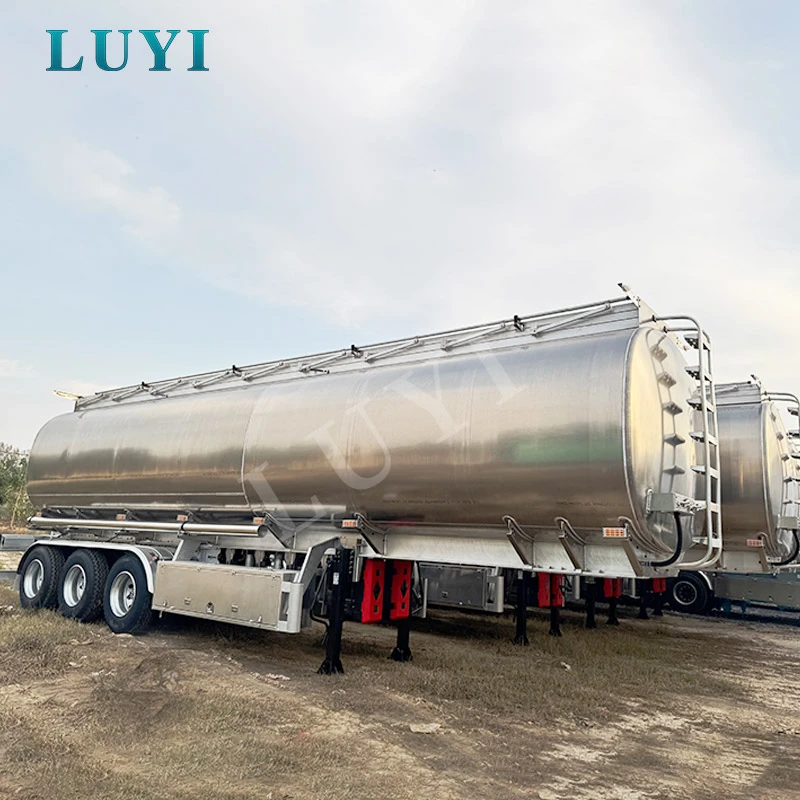
When every kilogram of unladen weight directly eats into your payload margin, the choice of tank body material is no longer a detail-it is the single biggest lever on your per-trip profitability. For oil transport operators running long-haul routes across East Africa, Central Asia, and South America, aluminum alloy tank bodies have rapidly become the industry standard, and the math behind why is strikingly straightforward.
A conventional steel oil tanker tipping the scales at roughly 9 to 11 tons can shed 3 to 4 tons of dead weight simply by switching to aluminum alloy. That is not a marginal tweak. It means on every trip, the truck can legally carry 3 to 4 tons more fuel or refined product, which translates directly into additional revenue per kilometer without adding an extra axle, an extra driver, or an extra truck on the roster. Over a year of daily runs, that incremental payload compounds into a substantial competitive edge-especially on routes where fuel margins are thin and freight rates are tight.
Beyond the raw weight savings, aluminum delivers secondary advantages that matter in real-world oil transport. It is inherently corrosion-resistant, so the tank does not suffer the internal rust and material degradation that steel tanks face when carrying different fuel grades over time. This extends service life, reduces maintenance downtime, and keeps the tank interior cleaner, which is critical for delivering uncontaminated product to refinery and distributor clients. Aluminum is also non-sparking, a genuine safety benefit when loading and unloading flammable petroleum products.
Weight reduction further lowers tire and brake wear, cuts fuel consumption on empty return trips, and reduces strain on the chassis and suspension. For fleet operators bidding on long-term contracts in emerging markets, an aluminum tanker signals operational sophistication and lower total cost of ownership.
The upfront purchase price is higher than steel, but the payback arrives within the first year through extra payload and reduced maintenance. For anyone serious about optimizing oil transport economics, aluminum alloy is no longer an upgrade-it is the default.
