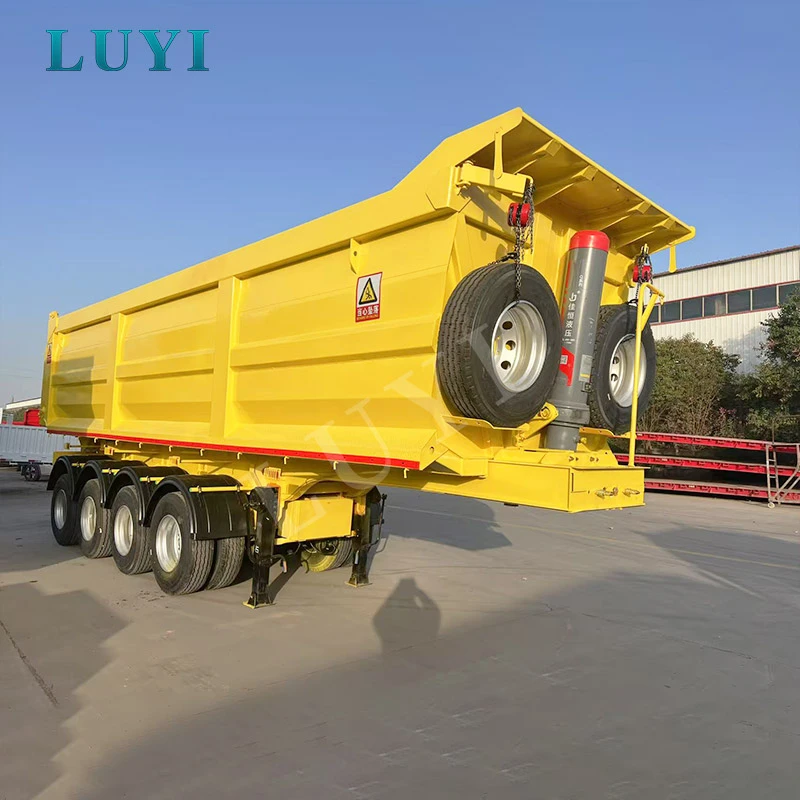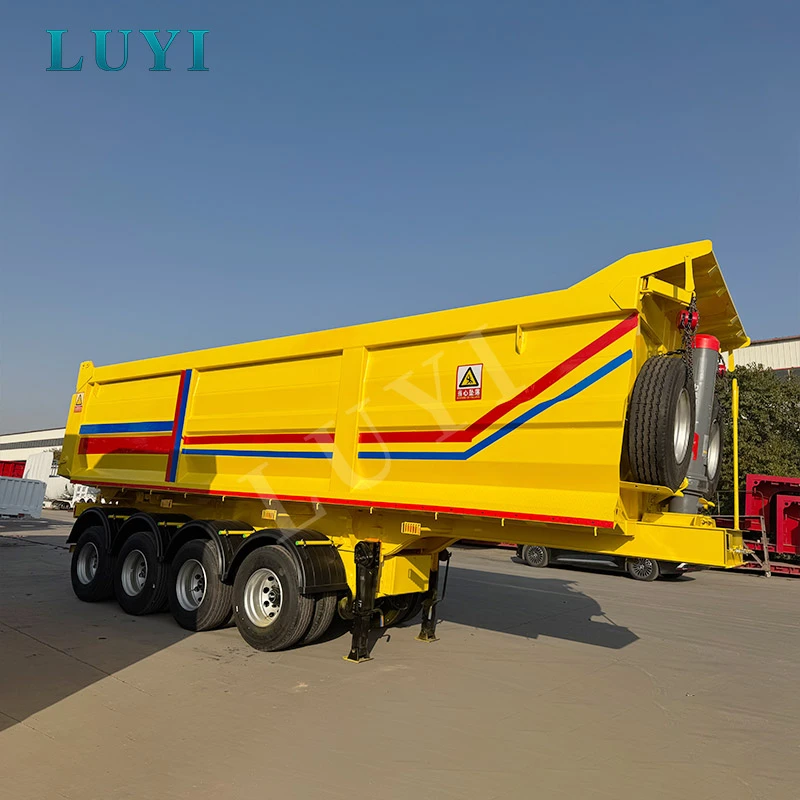
Picking a proper tipping angle matters a lot for tipper semi-trailers when discharging bulk goods. If the angle is too small, leftover cargo will stick to the truck bed. If you lift it too steeply, the hydraulic parts and chassis will bear heavy extra pressure, and the whole trailer may even tip. You need to set the angle based on material features, including moisture content, particle size and compaction condition.
Dry, free-flowing goods like grain, sand and loose fertilizer do not need a big angle. They slide down easily by gravity. Normally 30–45 degrees is enough for complete unloading. This mild angle shortens lifting time and lessens wear on hydraulic cylinders, helping operators finish delivery cycles steadily.
Wet, sticky substances such as damp clay, mud and farm manure are different. Water makes them cling firmly to the bed and side panels, and fine grains get packed tight during transit. An angle of 45–55 degrees works better here to overcome adhesion. It also helps if the truck bed has a smooth lining and the tailgate opens wide.
For dense heavy loads including ore, coal and construction rubble, safety comes first alongside smooth unloading. Chunks and irregular fragments do not flow like fine sand. Most crews use 40–50 degrees for these materials. Never raise the body on sloped or soft ground; heavy cargo plus a lifted trailer body creates high overturn risk.
Fine powder materials like cement dust and fly ash are easy to form bridging inside the container. The tipping angle has to be steep enough to break such blockages, meanwhile workers need to take measures to control flying dust.
In real site work, it is wise to adjust the angle according to actual material status instead of sticking to fixed data. Take your time during lifting. A matched tipping angle ensures thorough unloading, protects your trailer and keeps every transport run safe and efficient.