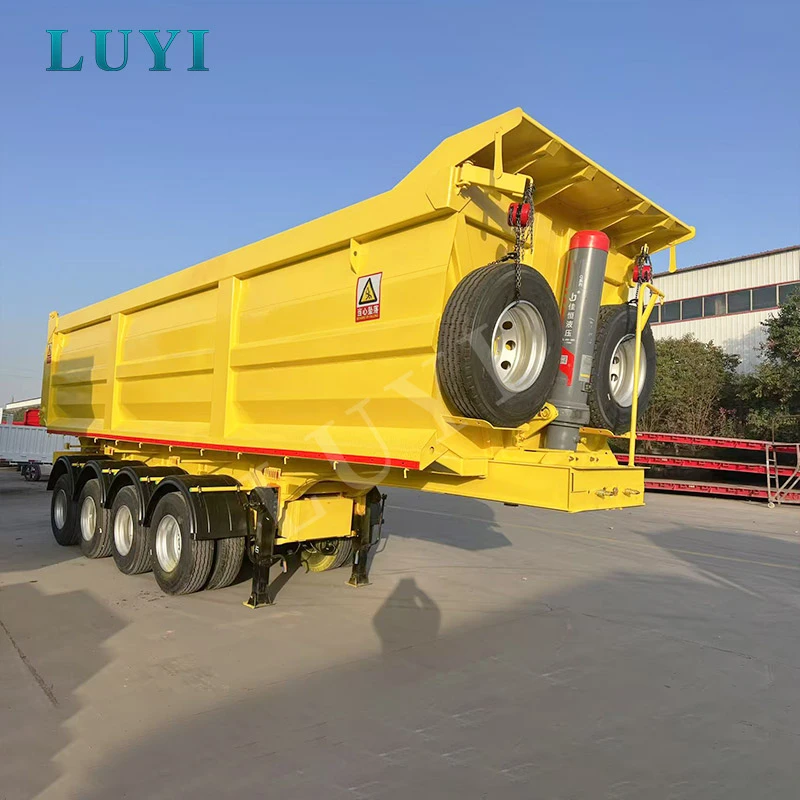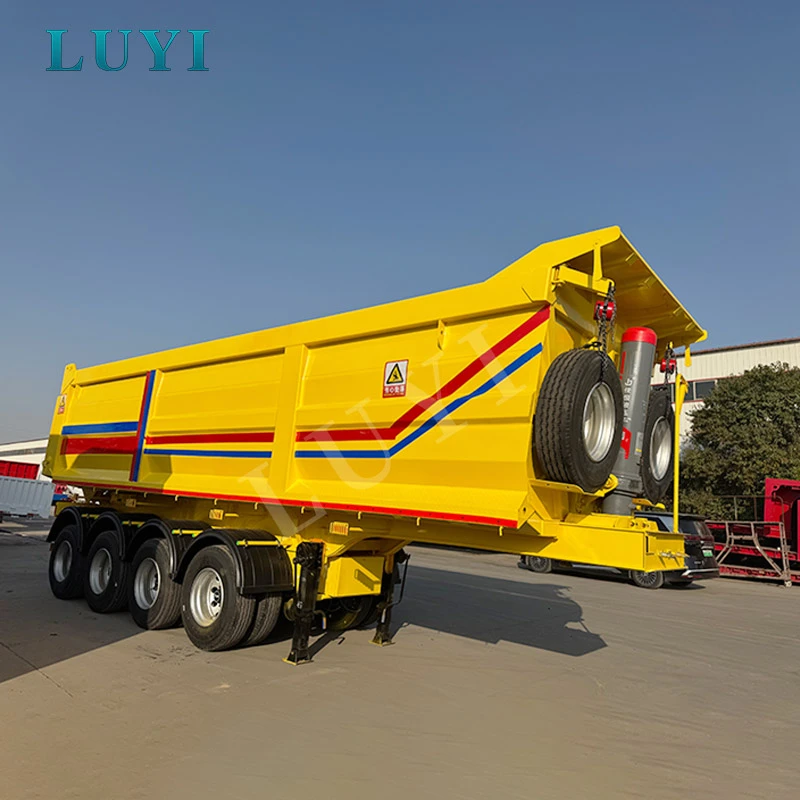
A dump trailer works under heavy load, rough roads and repeated lifting cycles. Among all its components, the rear latch system is one of the most safety-critical, because it keeps the tailgate closed until the driver intends to open it. A weak or worn latch can release unexpectedly during transport, spilling gravel, sand, construction waste or ore onto the road. This creates danger to following vehicles, damages cargo, raises cleanup costs and may lead to legal responsibility.
Robust rear latches are designed to resist the forces that come from real working conditions. During travel, the trailer body shakes over potholes, speed bumps and uneven highways, and the cargo shifts forward and backward. At the same time, heavy material presses against the tailgate, pushing outward. A low-quality latch may loosen under this vibration, or its hook may slip off the striker. A heavy-duty latch, by contrast, uses thick steel plates, reinforced hinge points and a firm locking tooth that stays seated even when the body bounces.
The locking mechanism itself matters just as much. Reliable latches often combine a positive mechanical lock with a secondary safety catch. When the tailgate closes, the hook drops into place and cannot bounce open on its own. The secondary catch adds another layer: if the main latch vibrates loose, the backup still holds the gate closed. Many designs also use adjustable bolts so the gap
between latch and striker can be tightened over time as parts wear. This keeps the joint tight instead of leaving a loose gap that lets the gate rattle.
Material quality determines how long this protection lasts. High-strength steel, proper welding and anti-corrosion coating help the latch resist bending, cracking and rust in dusty, wet or coastal environments. Cheap cast parts may look similar, but they can break under repeated load or cold weather. A solid latch should also be easy to operate from the ground, so the driver can check and release it without extra tools.
Maintenance should not be overlooked. Operators should inspect latch pins, springs, hooks and welds before long trips, grease moving parts regularly, and replace any part that shows wear or deformation. Even the strongest latch cannot protect forever if it is left loose or damaged.
In the end, robust rear latches protect people, cargo and reputation. They prevent unexpected tailgate opening on rough roads, reduce accident risk, and give drivers confidence when hauling heavy bulk materials. For any dump trailer built for daily heavy use, a dependable latch system is not an extra feature, it is basic safety equipment.