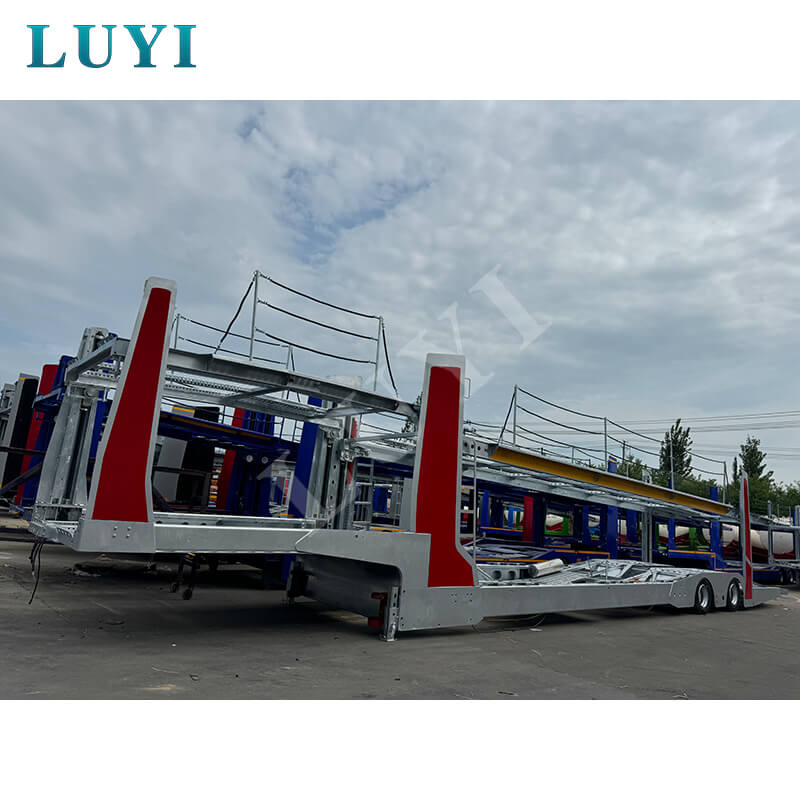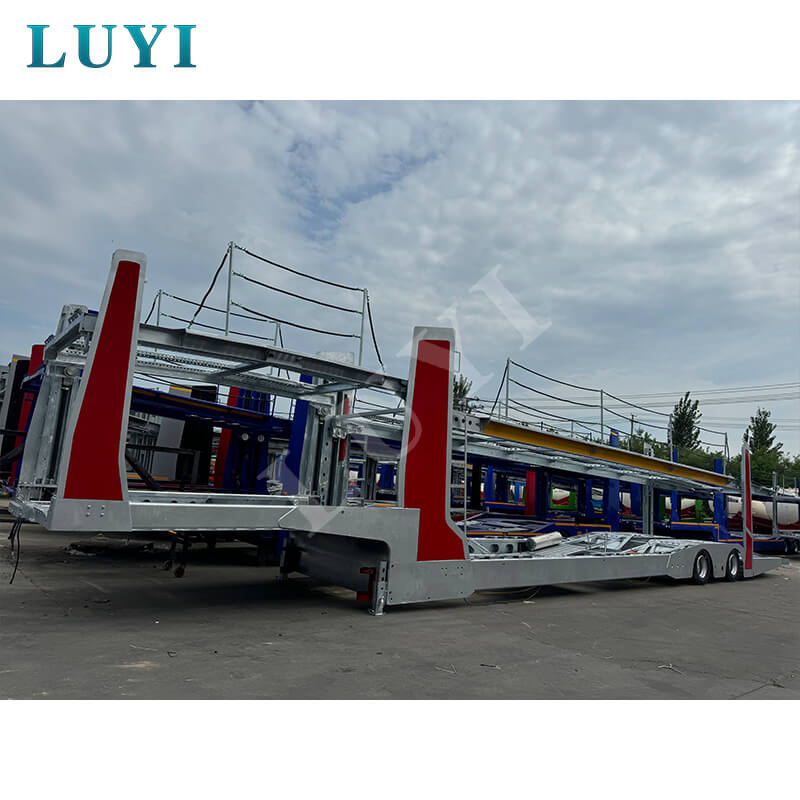
The lifting gear is what supports the upper deck on two-level car carrier trailers. Without it, you cannot load and secure extra vehicles for transport. Tiny defects that go unnoticed can make the deck fall without warning, ruining vehicles or injuring crew members. Pre-trip checks and regular upkeep are not optional for safe operation.
First, go through all hydraulic parts. Inspect cylinders, hoses, fittings and valves for oil leaks, scrapes and surface rust. Lift the deck and leave it under load for a short while. If the deck slowly drifts down, seals or check valves have worn out. Keep hydraulic oil at the proper level. Dirty oil speeds up wear on pumps and valves, so change it on schedule.
Next, check locking pins and safety latches. Hydraulic pressure alone will not hold the deck steady during transit. Lock pins need to slide freely and click fully into place. Bent, rusty or missing pins must be replaced immediately. These mechanical locks are the main safeguard against sudden deck failure.
Then check cables, chains and pulleys. Look for snapped wire strands, stretched chain links and heavy corrosion. Spin pulleys to make sure they turn smoothly. Check support brackets for cracks along welds. Any damaged load-bearing parts cannot stay in service.
Also check structural areas under constant stress. Focus on deck hinges, pivot points and welded joints. Lifting and lowering over and over causes metal fatigue and bending at these spots.
Last, check how you place the load. Never exceed the trailer's rated weight. Spread vehicles out evenly to avoid heavy load on one side. Operators must double-check all latches are locked before pulling onto public roads.
Doing these checks every time cuts down lifting gear breakdowns and keeps the car carrier trailer working safely.