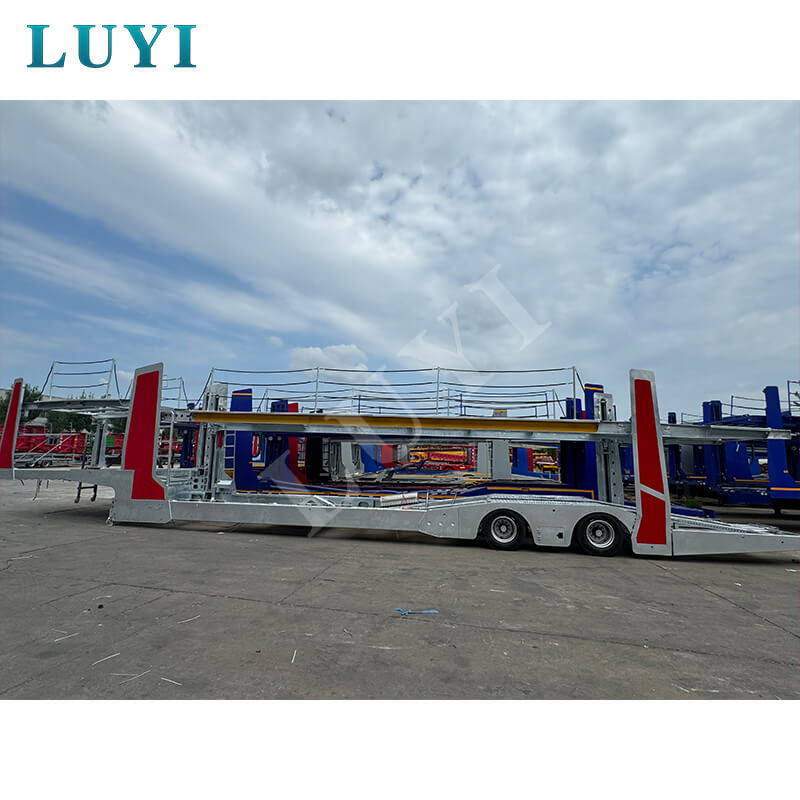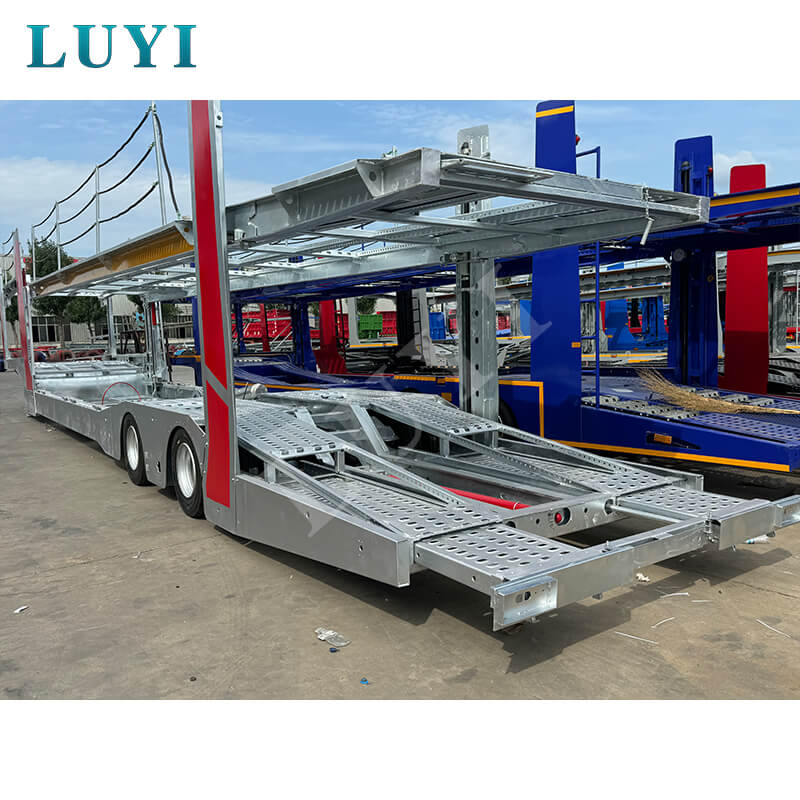
Hauling passenger cars and light electric vehicles on car carrier semi-trailers needs hands-on securing work to avoid sliding and impact damage. Light EVs need extra care. Their heavy under-mounted battery packs and delicate underbodies create unique risks during loading and transit.
Before loading, walk through the trailer. Check decks, ramps, winches and D-ring anchors. Do not use ratchet straps with worn webbing or bent hooks. Check tyre pressure on every vehicle. Soft tyres make cars shift easily on rough roads. For light EVs, measure ground clearance to prevent scratches to battery trays when driving up ramps.
Drive cars onto the trailer slowly. Park each vehicle in the middle of its bay and leave enough gap between neighbouring cars. After stopping, put automatic cars in Park, manual cars in first gear and pull the handbrake. Place wheel chocks next to tyres for extra safety.
Use four heavy-duty ratchet straps for each vehicle. Hook straps only to factory marked chassis anchor points. Never fix straps to suspension arms or body panels; these parts can bend under stress. Keep straps at roughly 45 degrees and tighten them crosswise so pressure spreads evenly. Keep straps away from EV high-voltage cables and charging ports.
When shipping EVs, switch on transport mode if the vehicle supports it. This stops sudden auto-braking or accidental battery system wake-up on the road. Do not pull straps too tight, or you may damage the battery pack.
Once all vehicles are secured, make a full round inspection. Pull each strap to test tension and check wheel chocks. Go back to retighten all lashings after the first short run and at every rest stop. Follow these real-site practices to protect your cargo and keep car carrier transport safe.