

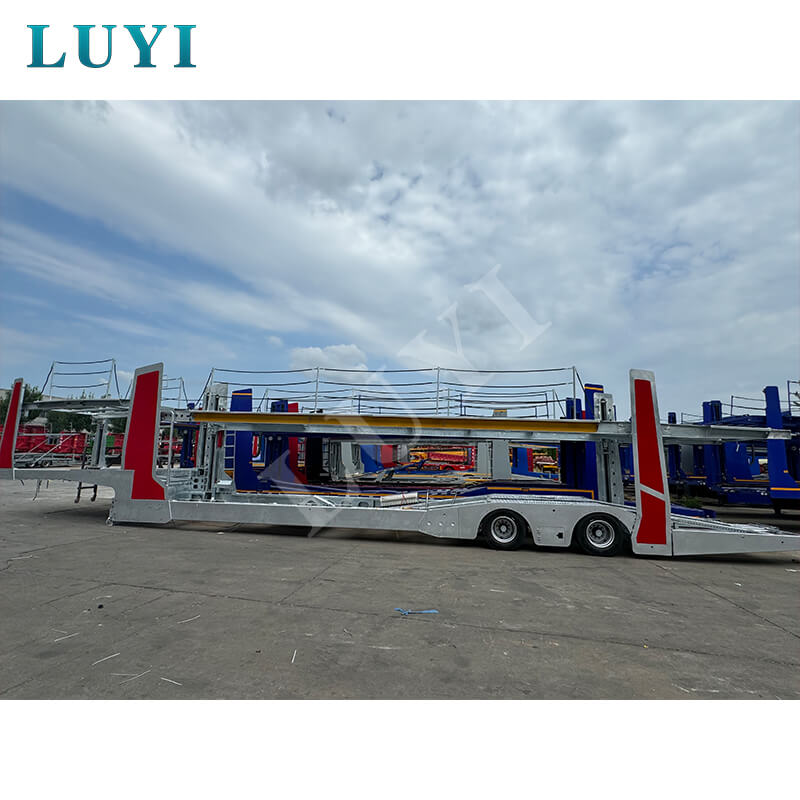
If your business handles long‑haul delivery of newly built passenger cars, your choice of car carrier trailer really matters. People often underestimate just how risky these journeys can be. Fresh from the factory, these cars still have their original paintwork, and even a small mark or scuff on the body can create big headaches for dealers and shipping firms alike. Damaged units can no longer be sold as brand‑new inventory, which directly translates into financial losses.
Most general‑volume shipments go with open‑style double‑deck carriers. Built on heavy‑duty steel frames, these trailers run hydraulic lifting platforms so drivers can arrange several vehicles on two levels in one load. It helps cut down on repeated trips, saving both fuel spending and working hours over those long cross‑country highways. Rubber pads and sturdy wheel restraints hold each car firmly in place, stopping them from shifting when roads get rough. For regular mass‑market vehicles, this setup remains the most practical budget‑friendly solution.
That said, open carriers are not always the answer. Luxury models and modern electric cars demand greater care. A fully enclosed trailer keeps out heavy rain, intense sunshine, and loose stones kicked up by other traffic. This extra shelter guards the factory finish all the way to destination. Do not overlook running gear either; well‑set‑up axles and responsive brakes make journeys far safer across varied highway terrain.
In practice, there is no one‑size‑fits‑all trailer solution. Transport operators ought to look at what kinds of vehicles they ship most frequently, alongside typical road conditions on their routes. Thoughtful decisions help avoid preventable cargo harm and keep long‑distance vehicle logistics running smoothly.
