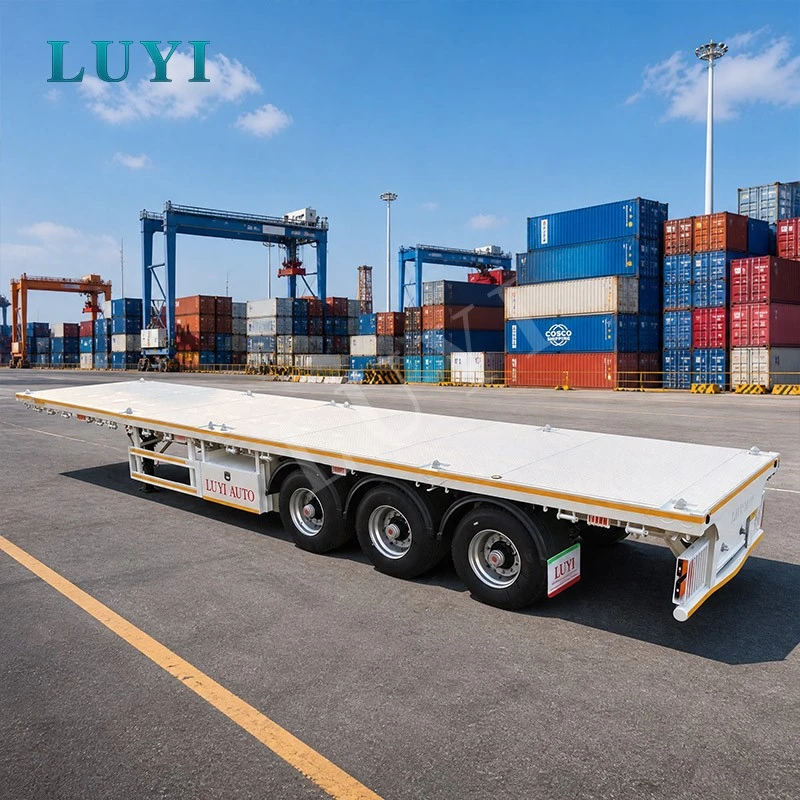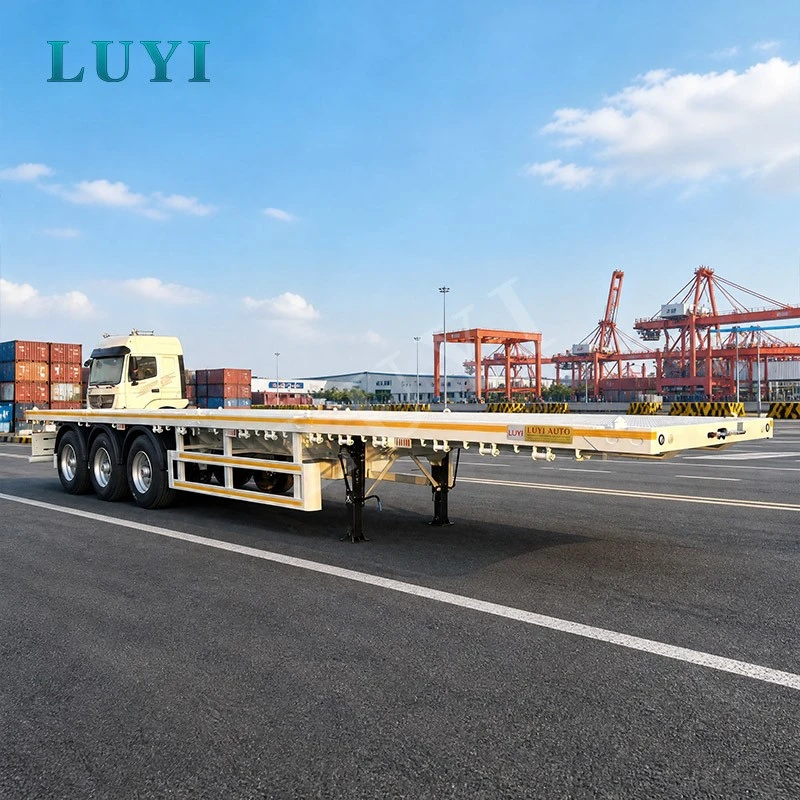
More logistics businesses in Pakistan are adding 40ft flatbed container semi-trailers to their fleets to run cross-border cargo shipments. Regional trade keeps picking up between Pakistan and neighboring markets including China, Central Asia, Iran and Afghanistan, so haulers need tough, adaptable trailers that cope with long trips and uneven road surfaces. Many local fleet owners now pick this flatbed model thanks to its flexible use and solid running cost performance.
This open-deck 40ft trailer works well for different cargo. It can lock standard shipping containers safely with twist locks, and also take steel products, construction supplies, farm goods, pipes and out-of-gauge machinery. Crane and forklift loading is straightforward on its flat platform. For logistics teams, one trailer covers many shipment types, which helps keep fleet utilization high instead of sitting idle.
Cross-border travel brings plenty of tough conditions. These trailers use thick steel main beams and stable suspension to handle bumpy mountain roads and heavy daily running. Operators can pick suitable axle layouts based on their regular cargo weight. Reliable brakes, wear-resistant tyres and anti-rust paint help cut sudden breakdowns, a key point when delays at border checkpoints already hurt delivery timelines.
Local transporters care a lot about stable delivery and lower running expenses. This flatbed design helps cut cargo damage and shorten loading and waiting hours at borders and yards. It also supports firms to keep consistent service for overseas customers. Most buyers check frame quality, payload, spare part access and local after-service before placing orders.
For Pakistani freight providers, the 40ft flatbed container semi-trailer is a sensible purchase. It balances load capacity, flexible cargo handling and long-term durability, supporting regional cross-border trade and helping transport firms expand their business steadily.