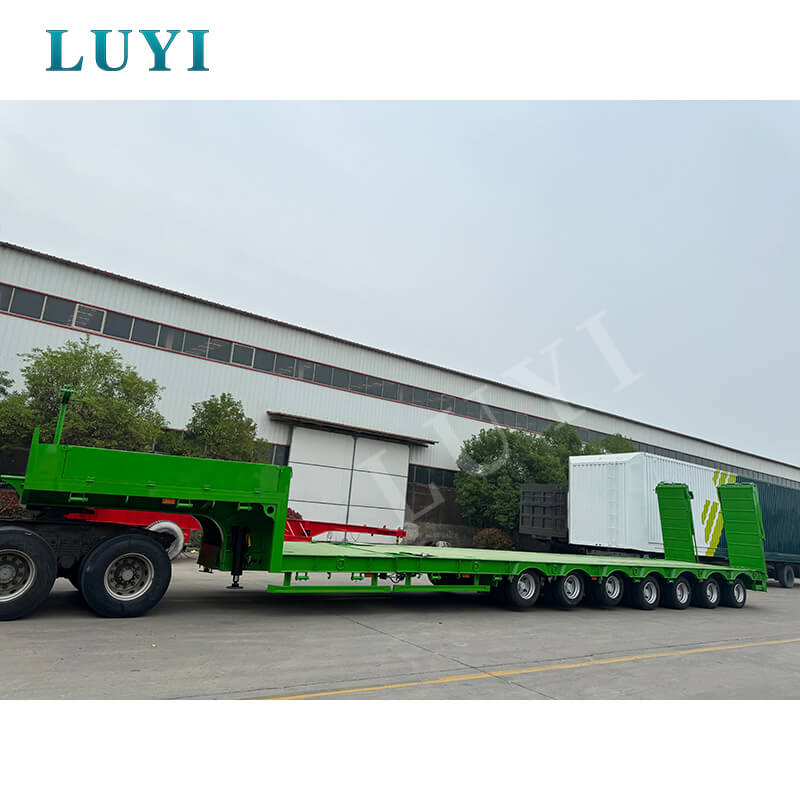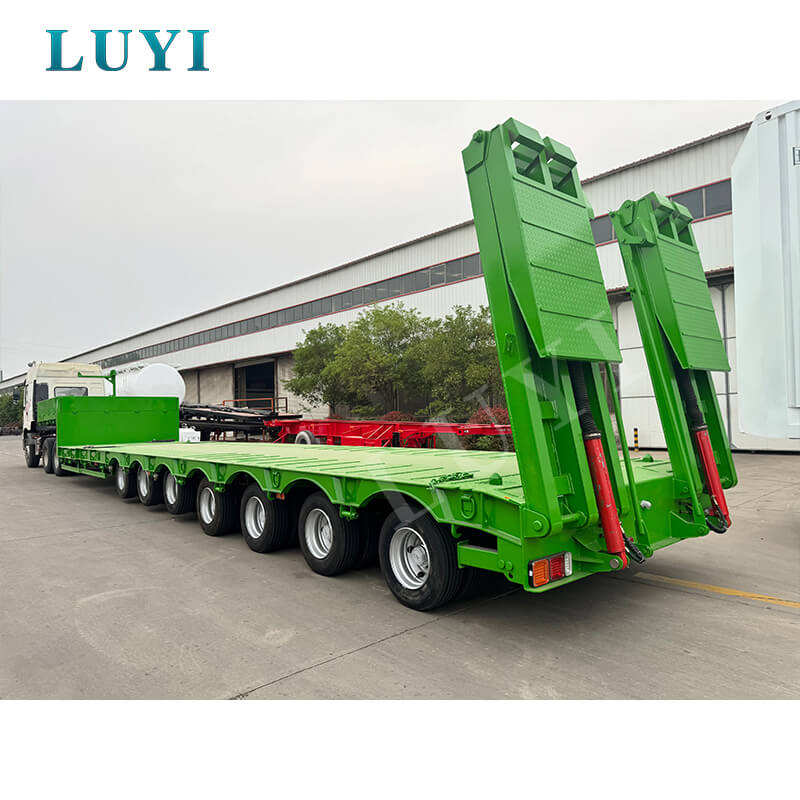
Anyone working in heavy trailer transport knows that getting the axle number right is one of the most basic yet critical parts of lowboy haulage. Axle configuration directly affects vehicle stability on the road and determines whether a transport task meets local traffic and weight regulations. If the axle count does not match the cargo weight, trailers tend to run unstably and may even fail official road inspections, as each axle bears a fixed proportion of the total load. In real-site logistics work, technicians arrange axle structures mainly based on the actual weight of goods, while taking local road restrictions and bridge bearing standards into account to prevent surface compression damage to public traffic facilities.
Based on years of real transport experience, frontline workers have formed reliable axle matching standards for different cargo weight ranges. Lowboy trailers equipped with two axles are widely used for loads under 25 tons, mainly for moving small construction equipment and conventional heavy industrial products. For most daily heavy-load deliveries, three-axle trailers are the most cost-effective choice, with a safe carrying capacity of 40 to 55 tons. This rational structural design distributes weight evenly during travel, adapting to most common haulage scenarios. When cargo weight reaches 60 to 80 tons, four or five axles are required to disperse ground pressure and prevent single axle overload and subsequent mechanical faults.
For super-heavy cargo exceeding 80 tons, transporters usually adopt six or more axles or assembled modular axle structures to comply with strict heavy transport rules. Such custom configurations effectively protect the trailer chassis from abrasion, fatigue and irreversible deformation during long-distance trips. Seasoned transport staff typically reserve an extra 20% load margin on top of the static cargo weight. This reserved capacity can well cope with variable dynamic loads generated by bumpy roads, emergency braking and long-time running vibration. Adopting this practical matching method effectively avoids safety hazards and regulatory penalties, extends trailer service life, and optimizes the overall operational benefits of heavy cargo transportation.