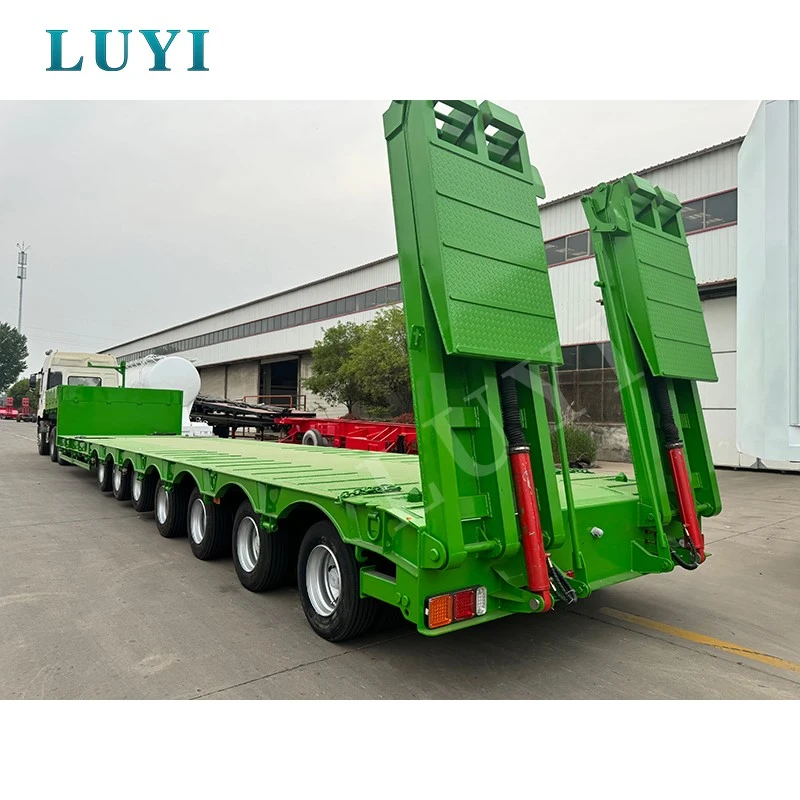
This guide outlines real-world loading and unloading practices for detachable gooseneck lowboy trailers, tailored for field transportation work. It is designed to reduce common site safety risks, protect trailers and construction machines from accidental scratches, collisions and structural damage, and align with regular heavy-load transport standards. The procedures apply to most self-propelled heavy machinery on construction sites, including typical equipment like excavators, bulldozers and road compaction rollers.
No loading or unloading work should start without full pre-site inspections. Field workers must check the trailer's hydraulic functions, lock sets and flat deck condition, and clean up gravel, dirt and leftover clutter on the platform surface. The trailer has to be settled on firm and even ground. Wheel chocks and extended support legs are required to stabilize the whole vehicle. Besides, staff must double-check the machinery's actual weight to rule out overloading issues that exceed the trailer's safe bearing range.
When preparing for loading, workers need to release the gooseneck safety locks and remove positioning pins step by step. Slow hydraulic adjustment will lower the gooseneck to create a gentle ramp for machinery boarding. On-site guidance is mandatory throughout the whole process to help operators drive steadily onto the trailer. Any abrupt turning or hard braking is prohibited. Anti-slip cushions and protective mats should be placed under the machine to stop sliding and surface wear. After proper placement, secure the equipment with multi-point tension chains and binding straps, then reinstall and fasten the gooseneck tightly.
Unloading follows a reversed working sequence. All fasteners and binding tools must be loosened slowly instead of being pulled off roughly, which avoids sudden tension release and equipment rebound damage. The gooseneck is then detached and lowered to form a safe exit slope. Guided by ground staff, the machinery can back or drive off the trailer at a steady low speed. Once all work is done, a full check on key trailer components is necessary to spot loose fittings, minor damages or potential faults, keeping the trailer fully functional for subsequent transport tasks.