

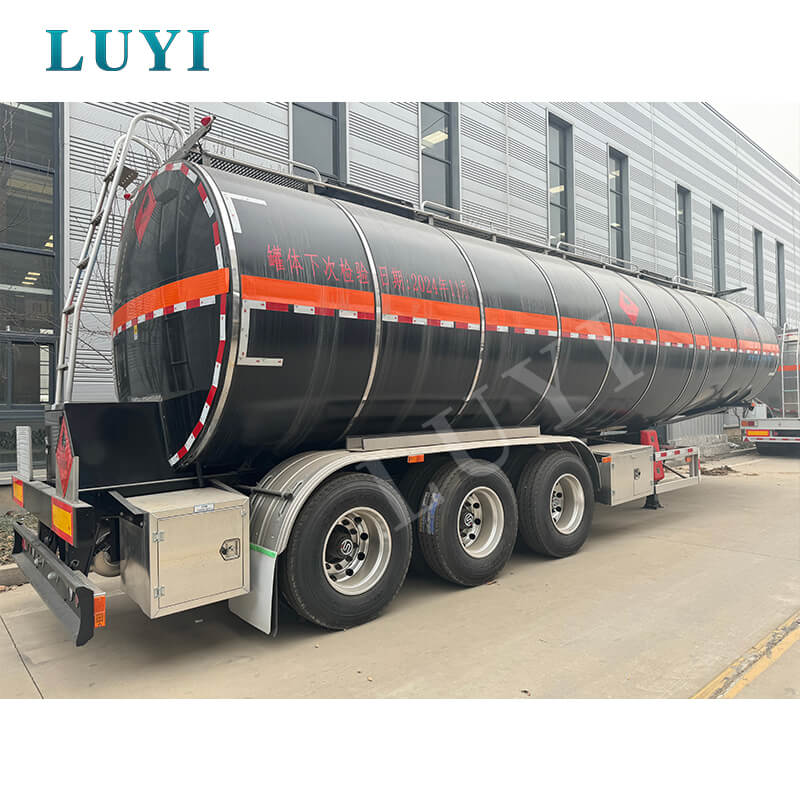
Liquid fuel tank trailers run into special safety troubles from fuel sloshing inside the tank. When drivers hit brakes, speed up or turn the steering wheel, free-moving fuel creates strong waves and shifts the trailer's weight all of a sudden. This unstable force can make braking take longer, trigger trailer sway, or even cause rollovers. Risks get higher when the tank is only partly full. Anti-wave baffles are key inner parts to cut these dangers and make road travel safer.
Anti-wave baffles are heavy steel plates mounted inside the tank, splitting one big tank space into several connected small chambers. These plates have holes of suitable sizes. The holes let fuel and gas flow between sections, but break big liquid waves and absorb energy from moving fuel. Liquid no longer forms one huge surge; it only moves softly within each separate space.
When drivers brake hard in emergencies, fuel without baffles rushes forward and puts extra load on the front axle, hurting braking power. Baffles hold back this forward shock, keep weight balanced and help the rig stop sooner. While taking corners, sideways fuel surges push the trailer outward and raise rollover chances.
By slowing side-to-side liquid movement, baffles cut lateral impact and keep the center of gravity steady, greatly boosting the trailer's resistance to rolling over.
In regular road use, frequent lane changes and speed adjustments easily set off continuous liquid shaking, bringing risks like fishtailing or jackknifing. Anti-wave baffles reduce this trailer wobble, so drivers can control the vehicle more reliably. Drain and vent holes on baffles also stop trapped liquid and gas buildup inside, slowing tank corrosion and keeping the structure solid for years.
Fitted with anti-wave baffles, fuel tank trailers behave more steadily on roads. This simple but practical design eases hazards brought by liquid slosh, protecting drivers, cargo and public traffic safety.
