

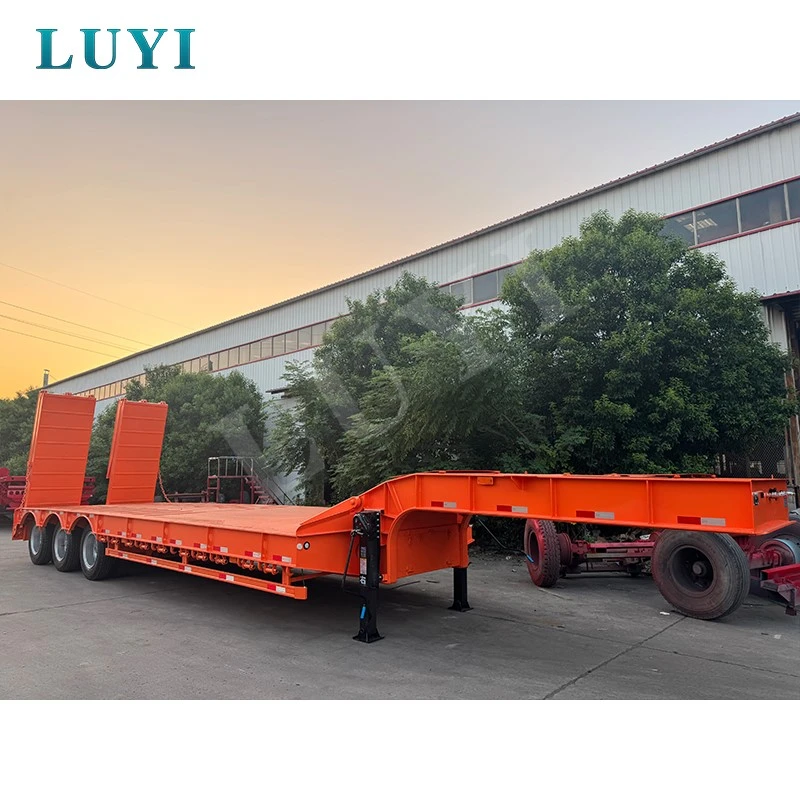
Driven by the booming modern logistics industry and increasingly stringent environmental policies for energy conservation and emission reduction, lightweight optimization has turned into a key development direction for semi-trailer production. High-strength lightweight steel, including mainstream grades such as S700MC and T700, has been widely adopted in current semi-trailer structural manufacturing. It has largely substituted traditional low-strength manganese steel due to its comprehensive performance advantages.
The biggest merit of this specialized steel lies in its outstanding combination of high mechanical strength and light weight. With a yield strength of 700 MPa, it is almost twice the strength of ordinary Q345B structural steel. Such superior performance enables manufacturers to use thinner steel sheets for trailer main frames, longitudinal girders and bottom structures while ensuring overall structural reliability. In practical production, the thickness of main beam steel can be adjusted from 12mm to 8mm, which greatly reduces the trailer's dead weight. This improvement directly raises effective load capacity, boosts logistics transport efficiency, and cuts down fuel consumption and exhaust emissions in long-distance transportation scenarios.
Besides superior strength-to-weight ratio, the material also boasts great stiffness, anti-fatigue and anti-impact properties. These characteristics effectively improve
semi-trailers' service life and driving safety when working under heavy loads and complex road conditions. It can effectively avoid structural deformation and crack damage caused by bumpy roads and long-term overloading. While high-strength steel has slightly poorer ductility than conventional carbon steel, advanced thermal processing and accurate welding techniques in modern manufacturing have well made up for this defect, fully complying with industrial production specifications and safety requirements.
To sum up, the popularization and application of lightweight high-strength steel greatly improves the comprehensive performance of modern semi-trailers. It helps logistics companies reduce operating and maintenance costs, and also drives the sustainable and green upgrading of the whole commercial vehicle manufacturing sector.
